Carmel Mountain Ranch's Median Price Can't Sit Still, and a Retired Golf Course Explains Why
October 1, 2026
October 1, 2026
Pull up three different real estate sites for Carmel Mountain Ranch this month and you'll get three different stories about the same ZIP code. One shows the median sale price climbing 7 percent over the past year. Another shows the typical home value up nearly 26 percent. A third shows list prices down 22 percent over the same stretch. These aren't rounding differences. They're describing the same 92128 streets and landing in opposite directions.
The instinct is to write this off as bad data or dueling algorithms. It isn't. Carmel Mountain Ranch is absorbing something it hasn't seen since the neighborhood was built: brand new houses. For nearly three decades, every home that sold here was a resale, built in the same narrow window in the 1980s and early 1990s. That changed when a golf course in the middle of the neighborhood stopped being a golf course.
The Carmel Mountain Ranch Country Club closed in July 2018. The club's general manager told CBS 8 at the time that rising water rates had made the course unaffordable to keep green, and the fairways that had wound through the community since 1986 went from manicured to brown almost overnight.
What followed was years of public process. Residents who lived along the closed course showed up in numbers to the reactivated Carmel Mountain Ranch/Sabre Springs Planning Board, worried about losing the open-space backdrop they'd paid a premium for. Troy Daum, who founded the resident group Carmel Mountain Ranch United, pushed the developer to consider other sites for new density. The developer, New Urban West Inc., spent time gathering community input before bringing a plan back to the city.
In 2021, the San Diego City Council voted 8 to 1 to approve that plan: The Trails at Carmel Mountain Ranch, a project built on the former course footprint that pairs new housing with a large permanent open-space commitment. Construction has been underway since, and it's the first significant addition to the neighborhood's housing stock since the original build-out finished.
The Trails preserves roughly 110 acres of the old course, about 70 percent of the site, as permanent open space, including native plant restoration. It adds 8 acres of new public parks and more than 5 miles of connected walking and biking trails that link into the existing Sabre Springs/Peñasquitos Transit Station and the surrounding neighborhoods.
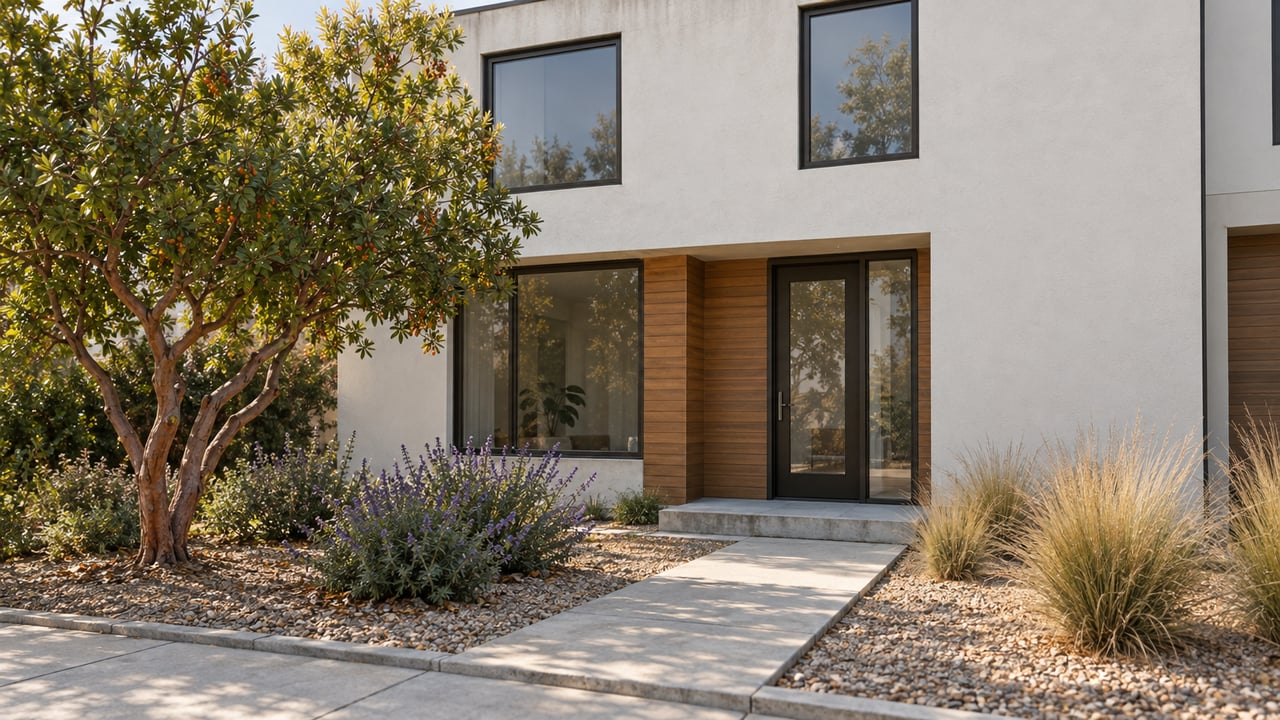
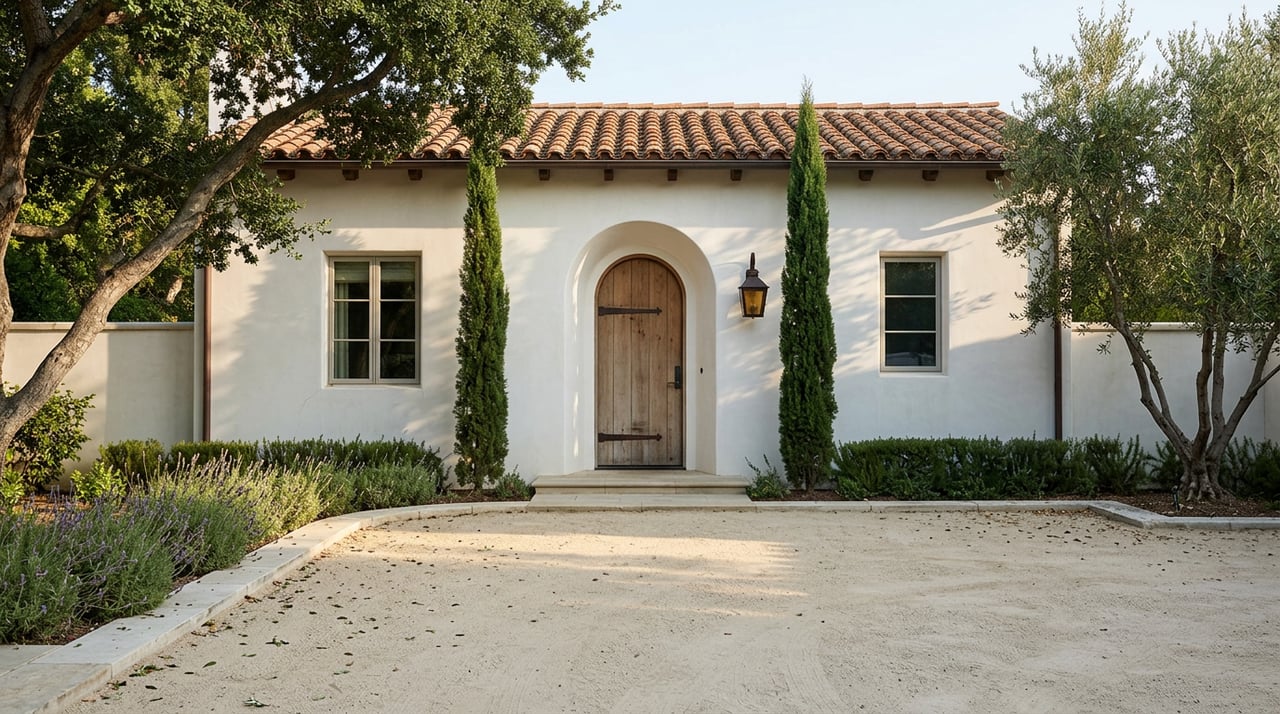
The homes themselves come in two distinct pieces, and the distinction matters more than it sounds. Lennar's Lavender collection, part of The Trails masterplan, is 169 new townhomes priced from $758,000 to $1 million. These are attached homes on a site that has, until now, been almost entirely detached single-family stucco with tile roofs and Spanish and Mediterranean styling from the original 1980s and 1990s construction.
A second, separate phase is dedicated affordable housing. Chelsea Investment Corporation is building 125 units on Rancho Carmel Drive, a mix of one-, two-, and three-bedroom apartments serving households earning between 30 and 60 percent of the area median income. That project is financed through roughly $3.9 million in annual federal tax credits and $40.6 million in tax-exempt bond financing, according to the state's tax credit allocation staff report, with construction expected to run from March 2025 through December 2026.
None of that housing looks like the neighborhood's existing stock. That's the point, and it's also why the price data is behaving strangely.
For most of Carmel Mountain Ranch's history, every home that sold belonged to roughly the same era and roughly the same category: two-story detached houses built within a ten-year window. A median calculated from that pool moves slowly, because the pool itself barely changes.
That pool just changed. New townhomes priced from the high $700,000s are now closing alongside decades-old detached homes that, in the current market, span a much wider range. A market snapshot from earlier this year showed a two-bedroom attached unit on Brent Wilsey Place selling in the mid-$700,000s in the same window that a four-bedroom detached home on Carmel Ridge Road listed near $1.5 million. Those two transactions belong to the same neighborhood and the same "median" calculation, but they no longer describe the same product.
Layer on top of that the sheer size of the sample. Redfin's own numbers show 28 homes sold in Carmel Mountain Ranch in a recent month, up from 17 the year before. That's a healthy year-over-year increase in volume, but it's still a small enough count that a handful of new-construction closings, or a handful of high-end detached sales, can swing the average or median by double digits in either direction depending on which few homes happened to close.
That's the mechanism behind the conflicting headlines. As of August 2026, Redfin's median sale price across all home types in Carmel Mountain Ranch sat at $1,179,431, up 7.0 percent year over year. A different Redfin snapshot for a separate month showed the median at $1.1 million, down 8.9 percent, with the average price down 26.0 percent. Zillow's typical home value estimate for the area was $1,005,588, up 25.9 percent year over year. Movoto's July 2026 figures put the median list price at $1.03 million with homes sitting a median of 105 days on market. Niche's estimate landed at $1,044,012. None of these organizations made an error. They're each averaging a small, rapidly changing mix of attached and detached, new and decades-old, in a neighborhood where that mix has never existed before.
The counterintuitive part is which direction new construction pushes things. New homes usually pull a neighborhood's price ceiling up. Here, because the new product is smaller attached townhomes rather than larger detached houses, it's just as likely to pull a blended median down, at least in the months when several of those units close together. A rising median one month and a falling one the next can both be true readings of the same underlying market, just with a different mix of closings behind each number.
If you're cross-shopping Carmel Mountain Ranch against nearby communities like Rancho Bernardo or 4S Ranch, the neighborhood-wide median is a weaker comp here than it would be somewhere with a more uniform housing stock. The useful question isn't "what's the median in Carmel Mountain Ranch," it's "what's the median for a detached home built in the 1980s or 1990s" versus "what's the median for the new attached product going up on the former course." Those are two different markets sharing one ZIP code, and asking your agent to filter comps by property type and vintage, rather than accepting a blended neighborhood figure, will give you a truer read than any single portal number will this year.
For sellers of the older detached homes, this is also worth understanding before you price. Your home is competing for buyer attention against new construction with builder warranties and modern floor plans for the first time in decades, in a specific price band around and below $1 million. That doesn't mean your resale home is worth less. It means the comp set your agent pulls needs to isolate similar detached, similar-vintage sales rather than leaning on a median that now includes homes built forty years apart.
Expect the noise to continue for a while. The affordable housing phase isn't slated to finish until December 2026, and Lennar's Lavender collection is still selling through its inventory. Every month that brings a cluster of new-construction closings into the data will keep bending the neighborhood median in ways that have nothing to do with whether existing homes are gaining or losing value.
Is Carmel Mountain Ranch's median home price going up or down in 2026? Depending on the source and the exact month measured, both answers currently show up in the data. The more reliable read is that the underlying detached resale market and the new attached townhome market are moving somewhat independently, and blending them into one neighborhood-wide figure is what's producing the conflicting trend lines.
Will the new construction hurt the value of existing homes? There's no evidence in the current data that it will. What it changes is the comp set: existing detached homes should be priced and evaluated against other detached homes of similar age, not against the new attached product entering a separate part of the market.
How much of the old golf course will stay open space? Roughly 110 acres, about 70 percent of the former course footprint, is designated as permanent open space under the approved plan, along with 8 acres of new public parks and more than 5 miles of connected trails.
If you're trying to make sense of what a specific Carmel Mountain Ranch home is actually worth against this shifting backdrop, rather than what a blended neighborhood average suggests, Michelle Warner can walk through the comps that actually match your property.
Stay up to date on the latest real estate trends.
Get assistance in determining current property value, crafting a competitive offer, writing and negotiating a contract, and much more. Contact me today.